Denied at the Dock: Turkey and Egypt Turned Away Our Gay Cruise
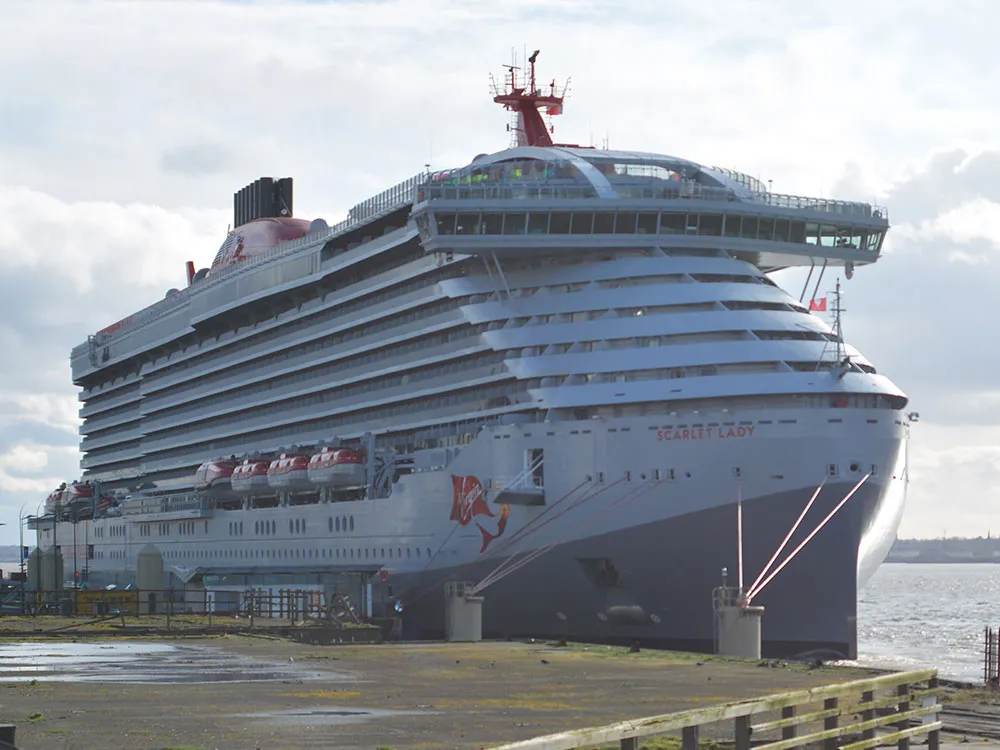
Turkey and Egypt denied an Atlantis gay cruise entry. A passenger aboard Virgin's Scarlet Lady on why closing a harbor is still discrimination
As a gay man, I have had the privilege of deciding whether or not to share my sexual orientation. Ever since I came out at 30 years old, I have witnessed remarkable progress in civil rights for our community. Over time, I have become much more open about who I am and have finally felt free to live as my authentic self.
On Thursday morning, roughly 2,000 of us were aboard Virgin Voyages' Scarlet Lady, an Atlantis Events charter that left Athens on Sunday for a 10-night Mediterranean sailing. Around 3:30 a.m. local time, passengers were awakened by a notification: Egypt had denied the ship entry into its waters, and the scheduled call at Alexandria — with shore excursions to Cairo and the Egyptian Museum — was canceled. Tracking data showed the ship approaching Alexandria, then turning back out to sea. Atlantis CEO Rich Campbell, who was on board, said the docking approval had been pulled at the last minute and called the reversal "really unheard of." Egypt was already the backup plan. Days earlier, Turkey had barred the same ship from stopping in Istanbul and Kusadasi.
That is why the decision by Turkey and Egypt to deny our gay cruise access is so deeply disappointing. It is a reminder that, despite decades of progress, there are still places where we are judged not by our character, but simply by who we are. To be discriminated against because of the way you were born is something I have struggled with. The difference is that I have often had the privilege of choosing whether to reveal that part of myself. Millions of LGBTQ+ people around the world do not have that choice.
Turkey, at least, said what it meant. On June 28, the provincial government that includes Kusadasi posted a news release announcing the cancellation, describing the groups aboard as, in translation, "known for their behavior incompatible with our society's structure and moral values." Egypt has said nothing at all. Tourism and government officials there could not be reached for comment, and Virgin Voyages did not respond to requests for information. The silence is its own kind of answer.
For years, gay cruises have visited countries with restrictive or anti-LGBTQ+ laws. We came as respectful visitors who wanted to experience the history, culture, and beauty of these places while contributing to their tourism economies. We never asked those countries to change their beliefs overnight. We simply asked to be treated with the same dignity afforded to every other traveler.
This is not a hypothetical. Atlantis has brought passengers to Turkey more than a dozen times across more than 20 years, including last year. Its chartered sailings have called in Egypt twice in the past two years. For this stop alone, the company had sold 1,200 tours booked through local operators — Egyptian guides, Egyptian drivers, Egyptian businesses — all of whom were ready and waiting. "All local authorities were ready for us," Campbell said. "We are now at sea trying to figure out what to do."
What is especially troubling is that this decision comes at a time when homophobia and transphobia are once again on the rise around the world. Despite decades of progress through the courts, legislatures, and the tireless work of LGBTQ+ advocates, we are witnessing a backlash that threatens rights many of us thought were secure.
Neither country involved here has a statute that plainly outlaws being gay. Turkey has not criminalized same-sex conduct since Ottoman law was reformed in the 19th century, yet Istanbul's Pride march has been banned every year since 2015, with participants routinely detained. Egypt has no explicit prohibition either; prosecutors instead use a decades-old "debauchery" law written to target sex work. Discrimination does not always require a statute. Sometimes it only requires a harbor and the authority to close it.
There is no doubt that the current version of the GOP is not the one many of us grew up with. The extreme right has made rolling back LGBTQ+ rights part of its political agenda, as reflected in Project 2025. When democratic nations fail to speak clearly in defense of human rights, it becomes easier for governments elsewhere to justify discrimination of their own.
The civil rights movement of the 1950s and 1960s paved the way for the gay rights movement, women's rights, environmental justice, Native American rights, and so many other struggles for equality. Those activists laid the foundation that allowed so many of us to build better lives. Because of them, we have come so far.
That is why it is so painful to see governments closing their doors to people simply because they are LGBTQ+. I believe Presidents Obama and Biden and perhaps even President George W. Bush—would have recognized that allowing our cruise to visit Turkey and Egypt was not about endorsing anyone's lifestyle. It was about extending basic hospitality and recognizing our shared humanity.
Patti LuPone, who is booked to perform on this cruise, put it plainly after Turkey's decision. A magnificent ship, she wrote, full of well-heeled gay men — and her — turned away for no reason other than who was aboard. She said the men on this cruise deserved better. They did. They still do.
Human rights are not special rights. We are not asking for more than anyone else. We are asking for the same rights, the same dignity, and the same opportunity to experience the world as every other traveler.
In the grand scheme of things, I will be okay. I have the privilege of living openly in Chicago, where I can be myself without giving it much thought. But my heart is with LGBTQ+ people living in Turkey, Egypt, and countless other places where being authentic can come at tremendous personal risk. They cannot simply leave. They cannot simply hide forever.
The denial of our cruise may seem like a small event to some, but it sends a much larger message. It tells LGBTQ+ people that they are still seen as less deserving, less welcome, and less worthy of equal treatment. That is why this matters. Progress is never guaranteed. It must be defended, protected, and extended until every person, regardless of who they are or whom they love, is treated with equal dignity.
As I write this, the Scarlet Lady is somewhere in the Mediterranean, still looking for a port that will have us. Greece, Crete, Croatia, and finally Italy are still on the itinerary. Somewhere out there, a country will let us dock. That should not feel like a favor.