Finding Pride as an LGBTQ+ Parent in 2026
Share this Post:
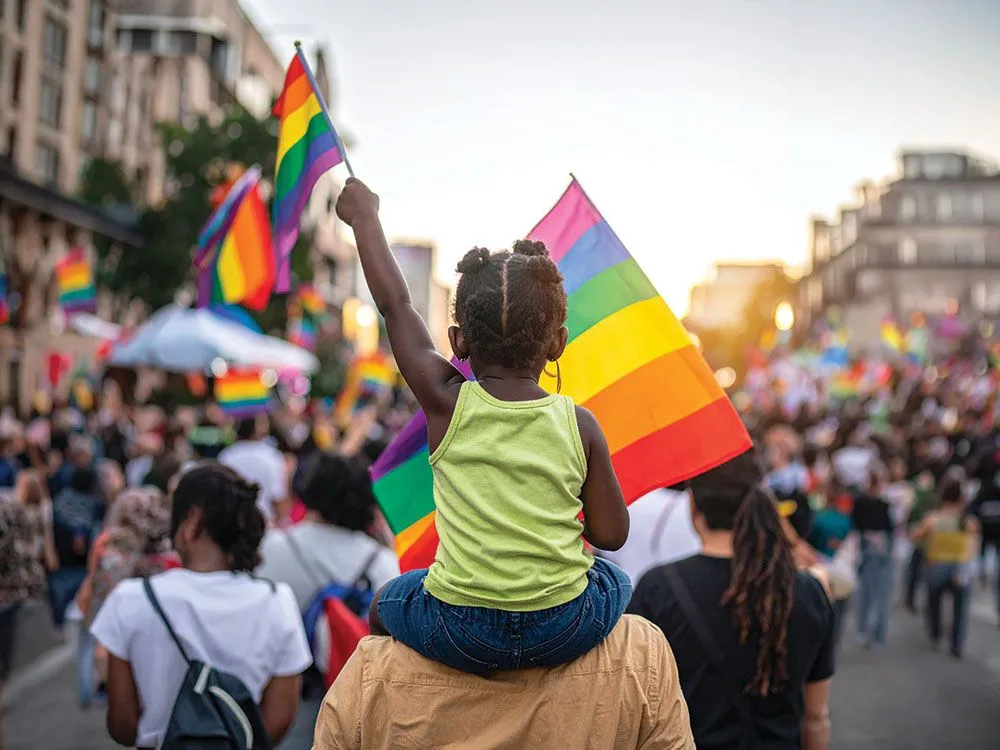
Photo generated with Adobe Firefly.
Pride is a word that contains multitudes. This month, I am thinking about how the various aspects of Pride and pride come together for me as an LGBTQ+ parent at this moment in history.
My pride in being an LGBTQ+ person comes from within, while my pride as a parent comes from my son, but those manifestations of pride are inextricably linked. Pride in ourselves should ideally come before we ever start to parent. If we are not proud of who we are, it is more difficult to instill pride in others—and teaching our children to be proud of who they are is one of our most sacred duties as parents. That is not to say we must have a spotless track record; all people have done something, however big or small, of which we are not proud. Nor must we banish every speck of self-doubt; to sometimes doubt ourselves is human, and a complete lack of self-doubt can easily tilt into the kind of overweening pride that goes before a fall. But a reasonable sense that we are good and worthy will help us raise children who believe the same about themselves.
Being proud of our children doesn’t just mean being happy when they win a sports trophy, perform in a concert, or make the honor roll, though. Our pride can come simply from watching them take a first step, share with a friend, or do the right thing in the face of pressure to do otherwise. It can mean watching them find their own interests and go in directions we never may have imagined, and seeing them grow into people of integrity and kindness. Perhaps some amount of our pride here is pride in ourselves for good parenting, but we should also simply be proud of our children for their achievements in and of themselves, while remembering that they are imperfect, too, like us.
It used to be that part of my pride during Pride came from reflecting on how my son had grown and learned during the school year that was ending. This year, however, he is beyond formal education and off on his career. I am no less proud of him for that, but the rhythm is different. That’s okay; pride is best not confined to schedules anyway.
Nor is my pride confined to my own family. Beyond my overarching pride in being part of the broad LGBTQ+ community, I am also proud to be part of the loving, tenacious, and resilient community of LGBTQ+ parents. We exist around the world and have done so throughout history (though not always in the sense that modern labels imply). We have been resourceful and determined in starting our families; fearsome in protecting them; loving in raising them; and selfless in supporting each other. We have faced obstacles but still found joy for ourselves and our children.
Individually and together, we have fought for recognition and understanding, achieving much of which we can be proud. That progress is under attack right now, though, and I can’t help but note that just days after Pride Month comes July 4, which for Americans means thinking about pride in our country. Indeed, the media buzz about that holiday is seeping far back into June this year, given the extra hullabaloo around the country’s milestone 250th birthday. But being proud of the United States is an exceedingly difficult task right now; it feels like there is much less to be proud of in recent years as it takes actions that harm its people and alienate the world. Ironically, one could attribute much of our country’s current woes to the overwhelming pride—in the sense of extreme arrogance and self-centeredness—of our current leaders.
I am trying, however, to at least find pride in a system that allows some states to implement positive policies and protections that can offset what the federal government and other states are doing. To name just a few recent wins: Delaware has updated its parentage laws to better protect the children of LGBTQ+ parents and others formed via assisted reproduction; Connecticut has expanded its required coverage of fertility health care to be more inclusive of LGBTQ+ and single people; Colorado has a new law allowing civil suits against providers of so-called “conversion therapy,” as a way to counter the U.S. Supreme Court’s recent ruling that permits this discredited practice; and Hawaii enacted a law to protect providers of gender-affirming care. I hope that the many LGBTQ+ individuals, organizations, and allies who contributed to that work are taking pride in it. Pride is, as the saying goes, a protest, and it is gratifying to see that we are still finding ways to fight inequality and make change.
At the same time, we can also express Pride and pride simply by reading an LGBTQ+-inclusive picture book with our kids, talking with them about how their family was created, or affirming their own interests and identities. Those actions may not have the visibility of a march or boycott but build an important inner pride in the next generation.
The word pride is multifaceted, just like LGBTQ+ people. We have much to be proud of personally, in our families, and as a community, even as some people’s hubristic pride threatens our progress. No matter how you are experiencing and expressing pride and Pride this year, may it be a time of renewed joy, strength, and resilience.
Dana Rudolph is the founder and publisher of Mombian (mombian.com), a two-time GLAAD Media Award-winning blog for LGBTQ+ parents, plus a searchable database of 2,000+ LGBTQ+ family books.
My pride in being an LGBTQ+ person comes from within, while my pride as a parent comes from my son, but those manifestations of pride are inextricably linked. Pride in ourselves should ideally come before we ever start to parent. If we are not proud of who we are, it is more difficult to instill pride in others—and teaching our children to be proud of who they are is one of our most sacred duties as parents. That is not to say we must have a spotless track record; all people have done something, however big or small, of which we are not proud. Nor must we banish every speck of self-doubt; to sometimes doubt ourselves is human, and a complete lack of self-doubt can easily tilt into the kind of overweening pride that goes before a fall. But a reasonable sense that we are good and worthy will help us raise children who believe the same about themselves.
Being proud of our children doesn’t just mean being happy when they win a sports trophy, perform in a concert, or make the honor roll, though. Our pride can come simply from watching them take a first step, share with a friend, or do the right thing in the face of pressure to do otherwise. It can mean watching them find their own interests and go in directions we never may have imagined, and seeing them grow into people of integrity and kindness. Perhaps some amount of our pride here is pride in ourselves for good parenting, but we should also simply be proud of our children for their achievements in and of themselves, while remembering that they are imperfect, too, like us.
It used to be that part of my pride during Pride came from reflecting on how my son had grown and learned during the school year that was ending. This year, however, he is beyond formal education and off on his career. I am no less proud of him for that, but the rhythm is different. That’s okay; pride is best not confined to schedules anyway.
Nor is my pride confined to my own family. Beyond my overarching pride in being part of the broad LGBTQ+ community, I am also proud to be part of the loving, tenacious, and resilient community of LGBTQ+ parents. We exist around the world and have done so throughout history (though not always in the sense that modern labels imply). We have been resourceful and determined in starting our families; fearsome in protecting them; loving in raising them; and selfless in supporting each other. We have faced obstacles but still found joy for ourselves and our children.
Individually and together, we have fought for recognition and understanding, achieving much of which we can be proud. That progress is under attack right now, though, and I can’t help but note that just days after Pride Month comes July 4, which for Americans means thinking about pride in our country. Indeed, the media buzz about that holiday is seeping far back into June this year, given the extra hullabaloo around the country’s milestone 250th birthday. But being proud of the United States is an exceedingly difficult task right now; it feels like there is much less to be proud of in recent years as it takes actions that harm its people and alienate the world. Ironically, one could attribute much of our country’s current woes to the overwhelming pride—in the sense of extreme arrogance and self-centeredness—of our current leaders.
I am trying, however, to at least find pride in a system that allows some states to implement positive policies and protections that can offset what the federal government and other states are doing. To name just a few recent wins: Delaware has updated its parentage laws to better protect the children of LGBTQ+ parents and others formed via assisted reproduction; Connecticut has expanded its required coverage of fertility health care to be more inclusive of LGBTQ+ and single people; Colorado has a new law allowing civil suits against providers of so-called “conversion therapy,” as a way to counter the U.S. Supreme Court’s recent ruling that permits this discredited practice; and Hawaii enacted a law to protect providers of gender-affirming care. I hope that the many LGBTQ+ individuals, organizations, and allies who contributed to that work are taking pride in it. Pride is, as the saying goes, a protest, and it is gratifying to see that we are still finding ways to fight inequality and make change.
At the same time, we can also express Pride and pride simply by reading an LGBTQ+-inclusive picture book with our kids, talking with them about how their family was created, or affirming their own interests and identities. Those actions may not have the visibility of a march or boycott but build an important inner pride in the next generation.
The word pride is multifaceted, just like LGBTQ+ people. We have much to be proud of personally, in our families, and as a community, even as some people’s hubristic pride threatens our progress. No matter how you are experiencing and expressing pride and Pride this year, may it be a time of renewed joy, strength, and resilience.
Dana Rudolph is the founder and publisher of Mombian (mombian.com), a two-time GLAAD Media Award-winning blog for LGBTQ+ parents, plus a searchable database of 2,000+ LGBTQ+ family books.